
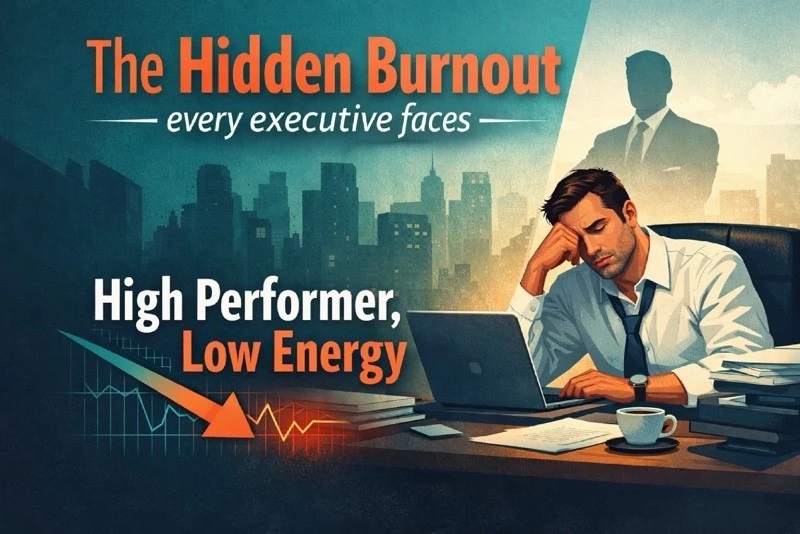
If you’re constantly carrying responsibility, making decisions under pressure, and staying “on” for everyone else, burnout can quietly take hold without you realising it. You can be successful, respected, and high-performing and still feel exhausted, tense, or mentally drained.
Executive coaching helps you prevent burnout before it becomes a breaking point. Instead of reacting after exhaustion sets in, coaching supports you in building sustainable ways to lead, think, and operate so your performance stays high without costing your wellbeing.
What is Executive Burnout and Why It Happens
Burnout at the executive level goes beyond feeling tired or stressed after a busy week. It’s a state of ongoing mental, emotional, and physical depletion caused by long-term pressure with little real recovery.
You may notice that your patience is thinner than it used to be, your focus isn’t as sharp, or decisions feel heavier than before. Work that once felt meaningful may start to feel draining or empty. Even time off doesn’t fully recharge you, because the stress patterns return as soon as you’re back.
Burnout often develops when you feel responsible for everything, struggle to disconnect, or believe slowing down will affect your credibility. Over time, your nervous system stays in a constant state of urgency. This makes clear thinking harder, emotional reactions stronger, and rest less effective.
Recognising these patterns early is key. The earlier burnout is addressed, the easier it is to reverse.
How Executive Coaching Stops Burnout Before It Escalates
Executive coaching works by helping you understand how stress shows up specifically for you and what keeps it in place. Rather than offering generic advice, coaching focuses on your leadership style, workload, mindset, and decision-making habits.
Through regular conversations, you begin to notice your early warning signs: when your energy drops, when your thinking narrows, or when pressure starts to override clarity. This awareness allows you to intervene early instead of pushing through until exhaustion forces a stop.
Coaching also helps you design more sustainable ways of working. This may include restructuring your schedule, redefining priorities, improving delegation, or setting clearer boundaries around availability. Small changes, applied consistently, create a significant shift in how much pressure you carry day to day.
Most importantly, coaching helps you move out of constant reaction mode. You regain a sense of control, calm, and intentional leadership even in demanding environments.
Why Executive Coaching Goes Beyond Stress Tips
Traditional stress management often focuses on coping strategies, such as relaxation techniques or short breaks. While these can help in the moment, they don’t address the leadership patterns that create overload in the first place.
Executive coaching looks deeper. It explores how your beliefs, habits, and expectations contribute to pressure. You may discover that perfectionism, over-responsibility, or reluctance to delegate are quietly driving your workload and stress.
Because coaching is ongoing, it adapts as your role and challenges change. Instead of relying on one-size-fits-all solutions, you receive personalised guidance that evolves with you. This makes the changes more realistic, relevant, and long-lasting.
Coaching also supports you in navigating the interpersonal side of leadership stress, difficult conversations, high-stakes decisions, organisational change, and the isolation that often comes with senior roles.
Coaching Practices That Build Long-Term Resilience
Effective executive coaching combines practical tools with mindset shifts that protect your energy over time. One key area is reframing unhelpful thinking patterns, such as the belief that you must be constantly available or personally involved in every detail.
Energy management is another focus. Instead of simply managing time, coaching helps you align demanding tasks with your natural focus and decision-making capacity. This allows you to work with your energy rather than against it.
Delegation is often a major breakthrough area. Learning how to delegate clearly and confidently reduces overload while strengthening your team. Coaching provides frameworks that help you let go without losing control.
Simple, executive-friendly grounding techniques are also introduced tools you can use between meetings or during high-pressure moments to reset mentally without disrupting your schedule.
When You Can Expect to Notice a Difference
Many leaders begin to feel small but meaningful shifts within the first few weeks of coaching. You may notice improved awareness, better emotional regulation, or a stronger ability to pause before reacting.
Within a few months, changes often become more visible. Decision-making feels clearer, boundaries feel more natural, and daily pressure becomes more manageable. Others may notice that you seem calmer, more focused, or more present.
Long-term resilience develops over time. Sustained coaching allows you to practice new habits across different situations, ensuring they hold up during busy periods, transitions, and high-stakes moments.
The pace of change depends on your current stress levels, your willingness to apply what you learn, and the environment you’re leading in. Consistent engagement brings the strongest results.
Choosing the Right Coach for Burnout Prevention
When choosing an executive coach, look for someone who understands the realities of senior leadership, not just stress in general. They should be familiar with the pressures of decision-making, accountability, and organisational dynamics at your level.
A strong coach offers practical, actionable guidance and asks thoughtful questions about your specific situation. You should feel both supported and appropriately challenged.
Equally important is personal fit. You need to feel comfortable being honest about pressure, fatigue, and doubts. Coaching works best when there’s trust, clarity, and open communication.
Practical considerations matter too availability, session format, and flexibility during demanding periods. The right coach feels like a strategic partner in your wellbeing, not another obligation.
A Sustainable Way to Lead Without Burning Out
Executive coaching offers a proactive path to burnout prevention. By helping you recognise patterns early, redesign how you work, and build resilience at a leadership level, coaching supports long-term performance without sacrificing your health.
If you’re noticing early signs of strain or want to strengthen your resilience before pressure increases executive coaching can help you lead with clarity, energy, and balance over the long term.